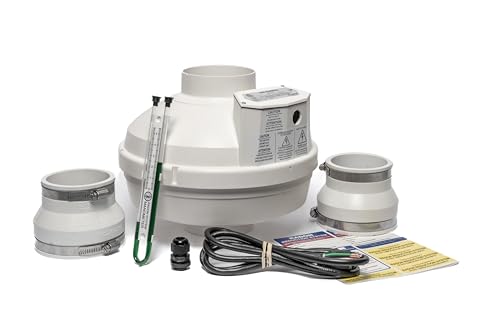
A mitigation system isn’t a one-time install-and-forget project. A little ongoing attention keeps it working for years.
- Check the manometer reading each heating season for consistent negative pressure.
- Radon fans typically need replacement every 5-7 years.
- Keep a record of fan model and installation date for maintenance planning.
- Periodically inspect pipe joints and seals for cracking, especially after foundation settling.
Regular Checks
Check the manometer reading each heating season — it should show consistent negative pressure (typically indicated by the liquid level difference in the U-tube gauge) confirming the fan is still creating suction. A reading at or near zero suggests fan failure or a major system leak.
Listen for the fan periodically; radon fans run continuously and a sudden silence or unusual noise (grinding, rattling) is often the first sign of impending failure.

Fan Replacement Schedule
Radon fans typically last 5-7 years of continuous operation before needing replacement, per most manufacturers’ ratings. Budget $150-$350 for a replacement fan when the time comes, and consider replacing proactively near the end of the rated lifespan rather than waiting for failure and an interim period of no mitigation.
Keep the fan model number and installation date recorded somewhere accessible (a note taped near the system or in a home maintenance log) so you know when replacement is due without having to track down old paperwork.
Sealant and Pipe Inspection
Periodically inspect exposed pipe joints and foundation seal points for cracking or separation, particularly after a home settles or after any nearby foundation repair work. Reseal with appropriate caulk or hydraulic cement if you notice gaps forming.

Read the Manometer Against Its Commissioning Number
A U-tube manometer is easy to misread because people look for a good value, and there is not one. The gauge shows the pressure the fan develops in that pipe on that house, so a reading that means health on one system can mean trouble on another. What carries information is change: the reading now against the reading the system produced the day it was commissioned.
So record that original number on the gauge housing with a marker on the day the system is signed off. Without it, every future check is a number with nothing to compare it to. EPA frames a radon reduction system much the way it frames a furnace or a chimney: it needs occasional maintenance, and the warning device is something to look at regularly to confirm it is working.
What a Level Reading Actually Means
A manometer that has gone level does not by itself diagnose a dead fan, and replacing the fan is the most expensive possible first guess. Four faults produce the same display. The fan has failed. It has lost power at the breaker or a service switch. The tube from the gauge to the pipe has pulled off, kinked, or filled with condensate. Or the system has opened at a joint, a cracked fitting or a failed slab seal, so suction is relieved before the gauge.
They separate quickly. Go to the fan and listen, because a running fan is audible up close and the housing hums. If it is silent, check the breaker and any service switch before assuming failure. If it is running while the gauge sits level, the fault is on the sensing side or in the pipe: trace the tube for a disconnection or a sag holding water, then walk the accessible run for a separated joint.
The Gauge Proves the Fan, Not the House
A manometer confirms that suction exists in the pipe. It says nothing about the concentration in the living space, and the two can diverge: a system can pull exactly as designed while a new crack or a change in how the house is operated lets enough gas past it. Only a measurement inside the house answers that, which is why upkeep guidance pairs the gauge check with retesting at least every two years to confirm levels remain low.
FAQ
How do I know if my radon fan has failed?
A manometer reading near zero, unusual fan noise, or complete silence from a normally continuously-running fan are all signs of failure. Retest your radon level if you suspect the fan has stopped working.
A failed fan means your home is no longer protected by the mitigation system — treat manometer or noise changes as a priority to investigate, not a minor maintenance item to defer.
These statements have not been evaluated by the Food and Drug Administration. This information is not intended to diagnose, treat, cure, or prevent any disease. Content is for informational purposes only and is not medical advice; consult a qualified healthcare provider before starting any supplement. As an Amazon Associate we earn from qualifying purchases.