Bundled radon product offers are common — here’s how to evaluate whether a specific bundle is actually worthwhile.
The thing that makes radon bundles harder to evaluate than most is that you often cannot tell at the point of purchase whether you will need the second item. A test kit bundle is worth its discount only if you go on to run the second test, and whether you do depends on a result you do not have yet. That uncertainty is what bundle pricing is built around, so the useful question is not whether the bundle is discounted but whether each item in it has an independent reason to exist in your particular situation.
- Test kit bundles (short-term plus long-term) can make sense if you’re planning both anyway.
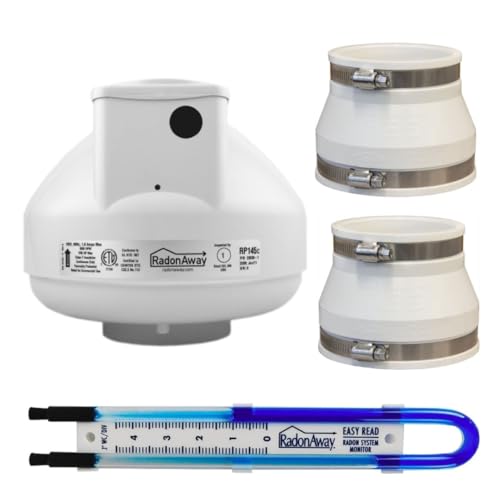
- Mitigation accessory bundles offer real convenience for DIY installers if component quality matches.
- Calculate the per-item price to confirm a bundle is actually cheaper than buying items separately.
- Skip bundles that pad in items you don’t actually need.
Testing Bundles
A bundle combining a short-term and long-term test kit can make sense if you’re planning the recommended follow-up long-term test after an initial screening anyway, potentially saving compared to buying each separately.
There is a specific case where a two kit bundle is genuinely the right purchase rather than an upsell, and it is worth knowing because it is also the case where buying a single kit leaves you stuck. Standard practice after an initial short term result at or above the action level is to confirm before committing to mitigation, either with a second short term test or with a long term test, since a single short term measurement can land high because of an unusual weather week. If your first result comes back elevated you will need a second device, and the confirmation matters more the closer the first number sits to the action level.
The bundles worth being sceptical of are the ones that pair items you would not otherwise buy together. Two short term charcoal kits with the same expiry date are a weaker proposition than a short term kit paired with a long term alpha track detector, because the second combination lets you screen quickly and then measure your annual average properly, which is the sequence most households actually need. Check the expiry dates on both devices before buying, since a bundle whose second kit expires before you are likely to deploy it is worth less than its price suggests, and confirm whether laboratory analysis is included for both kits or only for the first.
Mitigation Accessory Bundles
A fan bundled with a manometer and basic sealing supplies can offer real convenience and modest savings for a DIY installer who would otherwise need to source these items separately — check that the included manometer and sealant quality match what you’d choose independently.
Accessory bundles are easier to assess because the components have clear individual functions. A manometer belongs on every active system without qualification, since it is the only at a glance confirmation that the fan is still pulling, it costs very little, and it requires no power. A fan failure alarm addresses the same silent failure mode more actively by alerting you rather than waiting for you to look. Both are answers to the same underlying problem, which is that radon systems fail without any symptom you would notice, so a bundle pairing them is coherent rather than padded.
Where accessory bundles get weaker is when they include items whose suitability depends on specifics of your installation that the seller does not know. Vent pipe fittings, exhaust covers, and mounting hardware all come in sizes tied to your pipe diameter and your termination arrangement, and a bundled fitting that does not match is not a saving. Sealants are worth checking for shelf life and for whether the type suits the joint you intend to use it on, since the products used at a slab to wall joint, around a pipe penetration, and on a sump lid gasket are not always interchangeable. Confirm the pipe diameter your system uses before buying anything that has to fit it.
When to Skip a Bundle
Skip a bundle if it includes items you don’t actually need (a low-quality accessory just to pad the bundle) or if the per-item price, calculated separately, isn’t actually lower than buying the specific items you need individually.
Skip when the discount is doing the work of a decision you have not made yet. If you have not tested at all, the honest position is that you do not yet know whether you need mitigation accessories, and a bundle that includes them is pricing an outcome rather than a need. The same applies to a monitor bundled with a mitigation component before you know whether your house has a problem. Test first, then buy against what the result actually shows.
Skip too when the bundle economics only work if you never need support. Compare the return window and the warranty on the bundle against the same terms on the items bought separately, because bundles are sometimes sold as a single unit that has to be returned whole. For anything with a laboratory component, check whether analysis fees are included for every kit in the bundle or only the first, since a headline price that excludes the second analysis is not the discount it appears to be. And check whether the bundle price is genuinely below the sum of the current individual prices rather than below a list price nobody pays.

What You Actually Need, in Order
The sequence that avoids most wasted spending is straightforward, and following it makes the bundle question answer itself. Start with a single short term test in the lowest lived in level of the house, under closed house conditions, correctly placed. That one purchase resolves the largest uncertainty for the smallest outlay, and for a substantial share of homes it is the only radon spending that will ever be necessary.
If that result comes back below the action level and the house has not changed, the next purchase is a long term detector at some point to confirm the annual picture, since a single short term test taken in a mild week can understate a heating season average. If the result comes back at or above the action level, the next purchase is a confirming test rather than a mitigation system, because acting on a single elevated short term reading occasionally means paying for a system that a second measurement would not have justified. Only after confirmation does mitigation hardware become a rational purchase.
Once a system is installed, the accessories worth owning are the ones that address silent failure: a manometer at minimum, and a fan failure alarm if you want active notification rather than a manual check. A continuous monitor becomes genuinely useful at this stage too, because it turns fan failure from something you discover at the next scheduled test into something you notice within days. Reading that sequence back, most of the bundles on offer combine items from different steps, which is precisely why so many of them look like a saving and function as a prepayment.
FAQ
Should I buy a test-kit bundle if I’m not sure I’ll need the second test?
Only if the combined price is close to or better than a single kit alone, or if you’re reasonably likely to need the follow-up test anyway based on your situation.
Should I buy two test kits at once?
It is reasonable if the second is a long term detector rather than a duplicate short term kit, because that pairing covers both the quick screening question and the annual average question. Two identical short term kits are worth buying together mainly if you intend to test more than one level of the house, or if you already have reason to expect an elevated result and know a confirming test will be needed. Check that both carry usable expiry dates before committing.
Do I need a manometer if my fan has an indicator light?
They confirm different things. An indicator light generally shows that the fan has power, which is useful but not the same as showing that the system is developing suction under the slab. A manometer measures the pressure difference directly, so it will reveal a blocked or disconnected suction point, a cracked pipe, or a fan that is powered and spinning but no longer moving air. Manometers are inexpensive and need no power of their own, which makes having both the sensible arrangement rather than a redundancy.
Is a monitor and test kit bundle worth it?
It can be, because the two genuinely complement each other. A laboratory analysed kit gives you a result you can put in a file and, where the lab is proficiency tested, present to a buyer or an inspector. A continuous monitor gives you an ongoing picture that no single kit can, including how much your level swings between seasons and whether a mitigation system is still working. The combination is coherent. What is worth avoiding is buying either one before you know whether your house has a radon problem at all.
Compare unit pricing carefully — some bundles aren’t actually cheaper than buying items individually.
These statements have not been evaluated by the Food and Drug Administration. This information is not intended to diagnose, treat, cure, or prevent any disease. Content is for informational purposes only and is not medical advice; consult a qualified healthcare provider before starting any supplement. As an Amazon Associate we earn from qualifying purchases.
