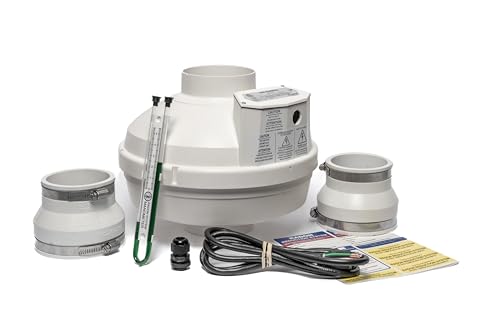
A radon mitigation system is visible to any future buyer’s home inspector, so it’s worth considering how DIY installation affects resale down the line.
A mitigation system is one of the few improvements a buyer’s inspector will always see and always comment on, because it is visible from the outside, mechanical, and permanently attached. That visibility is what makes the documentation question worth thinking about before installation rather than after.
- Inspectors and buyers may ask for documentation of a mitigation system’s installation and effectiveness.
- DIY systems without documentation can slow negotiations more than they reduce actual value.
- Keep pre- and post-mitigation test results and installation records together.
- A third-party verification test adds credibility to a DIY system for future buyers.
Buyer and Inspector Perception
Home inspectors will note the presence of a mitigation system and, in some cases, ask for documentation of installation date, fan model, and any prior test results. A DIY system without professional documentation can raise more buyer questions than a certified installation with a warranty and paper trail.
There are a small number of details a home inspector can assess from the visible portion of a system, and they tend to be the same details every time. The discharge point should be above the roof eave and away from windows and other openings so that expelled soil gas is not drawn straight back in. The fan should be mounted outside the conditioned space, meaning in the attic, in a garage that is not part of the living area, or on the exterior. There should be a working manometer on the pipe showing a pressure difference. A system that satisfies these on sight tends to pass without much discussion regardless of who installed it.
The fan location detail is the one worth understanding rather than merely copying, because it is a safety requirement rather than a stylistic convention. The pipe on the discharge side of the fan is under positive pressure. If that section runs through living space and develops a leak at a joint, it pushes concentrated soil gas into the house instead of venting it outdoors. A DIY installation that places the fan in the basement for easier wiring has inverted the logic of the system, and it is exactly the kind of thing an experienced inspector notices.
This doesn’t necessarily reduce value, but it can slow negotiations if a buyer’s agent or inspector wants more assurance about the system’s effectiveness than a self-installed system with no formal verification can provide.

Documentation That Helps at Resale
Keep your pre-mitigation test result, a record of the installation (photos, parts used, date), and your post-mitigation retest result together in a single file. This gives a buyer concrete before-and-after data regardless of who performed the installation.
The document that carries the most weight is the one people most often fail to produce, which is the pre-mitigation test result. Without it, a post-mitigation reading below the action level shows only that the house is currently fine. With it, the pair shows that a problem existed, that a system was installed in response, and that the level came down. That before and after pairing is the evidence a buyer is actually looking for, and it is impossible to reconstruct after the fact.
Keep the fan model and its installation date with those results, because fans are mechanical and a buyer’s practical question is how much service life remains. Add the post-mitigation retest and any subsequent periodic retests, since a series of results over several years demonstrates a system that has kept working rather than one that merely passed once on commissioning day. A short written note of where the suction points are and where the pipe runs is also worth including, as it saves a future owner or contractor from having to work it out.
Consider having a certified radon professional perform a verification test (distinct from installation) even for a DIY system — this adds a modest cost but provides third-party confirmation that carries more weight with buyers than a self-reported result.
When Professional Installation Is Worth It for Resale
If you’re planning to sell within the next few years, professional installation with a warranty may be worth the added cost specifically for the smoother resale documentation and buyer confidence it provides, beyond the mitigation performance itself.
The specific thing a professional installation adds at resale is transferable accountability. A certified installation typically comes with a workmanship warranty and, importantly, with a named certified party who performed the work and can be verified through the NRPP or NRSB directory. A self-installed system carries no such counterparty. The hardware may be identical and the result may be identical, and there is still nobody a future buyer can point to.
This matters most where the sale is already constrained. If a mitigation system is the thing standing between a buyer and their lender’s appraisal, or the transaction is on a short timeline, a documented certified installation removes a negotiating handle that an undocumented one leaves available. If you are not planning to sell for many years, this consideration weakens considerably, because by then the system’s own multi-year record of retests will be doing most of the persuading.

Independent Verification Is Separate From Installation
The most useful and least expensive step available to a DIY installer is to separate the testing from the installing. A radon measurement professional can be engaged to perform a post-mitigation test without having installed anything, which is a different and cheaper engagement than hiring a mitigator. The result comes from someone with no financial interest in the outcome, which is precisely what makes it persuasive to a buyer.
The independence argument runs the other way as well, and it is worth applying evenhandedly. A firm that both tests and sells mitigation has an interest in the finding, which is why some states restrict a single party from doing both in a real estate transaction. If you paid a mitigator for an installation, a confirming test from that same mitigator is the weakest form of the evidence. A third party result is stronger no matter who did the work.
For the test itself, follow the closed-house protocol carefully, because a post-mitigation result taken with windows open is not measuring the system. The house should be kept under closed conditions for twelve hours before the test begins and throughout the measurement period, with normal entry and exit permitted. A result produced under the same conditions as the original test is what makes the before and after comparison meaningful rather than merely reassuring.
FAQ
Will a DIY radon system hurt my home’s sale price?
It’s less about price and more about buyer confidence and negotiation friction. Good documentation and a professional verification test can offset most of this concern.
Why does the fan have to be outside the living space?
Because the pipe downstream of the fan is under positive pressure. A leak in that section inside the house would push concentrated soil gas indoors rather than venting it. Mounting the fan in an attic, an unconditioned garage or outdoors keeps the pressurized run outside the living area.
What single document helps most at resale?
The pre-mitigation test result. Without it a low reading only shows the house is fine now. Paired with a post-mitigation result it demonstrates that a problem existed and that the system fixed it, and it cannot be recreated later.
Can I get third-party verification without hiring a mitigation contractor?
Yes. Radon measurement and radon mitigation are separate certifications, and you can engage a measurement professional to test a system somebody else installed. It costs far less than an installation and carries more weight than a self-reported result.
Resale considerations shouldn’t be the primary factor in a mitigation decision — the main goal remains reducing your actual radon exposure.
These statements have not been evaluated by the Food and Drug Administration. This information is not intended to diagnose, treat, cure, or prevent any disease. Content is for informational purposes only and is not medical advice; consult a qualified healthcare provider before starting any supplement. As an Amazon Associate we earn from qualifying purchases.