Beyond price, consumer and professional-grade radon equipment differ in a few specific, meaningful ways worth understanding.
The assumption worth setting aside at the outset is that professional grade means more accurate. Across most of this equipment it does not. What the professional tier reliably buys is documentation, traceable calibration, tamper resistance, and durability under repeated commercial use, and those are properties that matter enormously in a real estate transaction or a regulated measurement and matter very little to a homeowner establishing whether their own basement has a problem. Deciding which tier you need is therefore a question about the purpose of the measurement rather than about the quality of the answer.
- Professional-grade equipment is built for repeated, continuous-duty professional use.
- Professional testing equipment includes more rigorous documentation for transaction integrity.
- Consumer-grade EPA-listed equipment is adequate for personal home screening.
- Choose the tier based on your specific need (personal use vs. transaction/professional use), not assumed superiority.
Build Quality and Durability
Professional-grade fans are often rated for a wider range of continuous-duty conditions and sometimes carry longer commercial-grade warranties, reflecting their use across many installations by mitigation businesses that need reliable, low-failure equipment.
The durability difference is real, and it exists because the duty cycles are not comparable. A professional mitigation fan may be installed in dozens of houses a year by a business whose reputation depends on none of them failing, so the specification is written around continuous duty over years with a low failure rate, and the commercial warranty reflects that. A professional measurement device is transported between properties, deployed, retrieved, and redeployed constantly, so it is built to survive handling that a homeowner’s monitor sitting on a shelf will never experience.
For a homeowner, that durability premium is often being paid for a stress the equipment will not encounter. A monitor that lives permanently in one basement is not being carried in a van. What does still matter at the consumer tier is the specification that relates to the actual installation: a fan housing rated for exterior mounting if it is going on an outside wall, a sealed enclosure appropriate to an unconditioned attic, and a fan performance curve matched to the soil under the slab. Those affect whether the system works and how long it lasts far more than the tier label does.
Documentation and Certification
Professional-grade testing equipment typically includes more rigorous calibration documentation and chain-of-custody features, valuable specifically for real estate transactions or situations requiring defensible, third-party-verifiable results.
This is where the professional tier genuinely earns its price, and the reason is that a transaction measurement has to be defensible to someone who was not present. That requirement produces a specific set of features: calibration traceable to a recognised standard with a dated certificate, tamper indication or continuous logging that shows whether the device was moved or the house was ventilated during the test, chain of custody documentation, and a report produced by a certified measurement professional. Continuous radon monitors used in real estate work typically log hourly readings, which reveals a window opened partway through in a way that no integrated average could.
None of this makes the underlying measurement more accurate. It makes it verifiable, which is a different property and the one a lender, a buyer, or an attorney actually needs. Many jurisdictions require that measurements made for real estate purposes be performed by a licensed or certified professional, so this is often not a choice about thoroughness but a legal requirement. For a homeowner testing their own house for their own decision, there is nobody to convince, no dispute to anticipate, and the documentation apparatus adds cost without adding information.
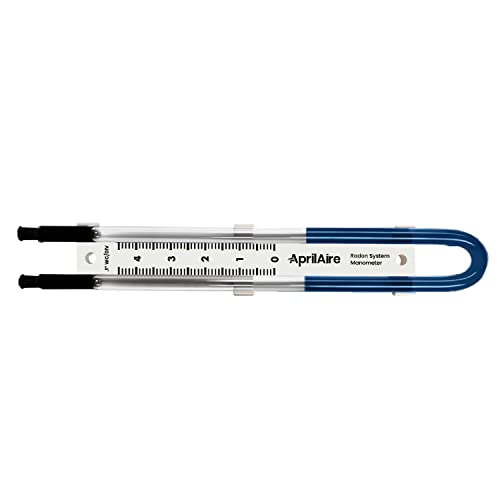
When Consumer-Grade Is Perfectly Adequate
For personal home screening without a transaction or legal documentation need, EPA-listed consumer-grade equipment provides adequate accuracy — the professional tier’s extra documentation and durability rating matter most for repeated professional use or transaction-specific integrity needs.
The consumer tier is adequate whenever you are the only person who needs to be convinced. A short term charcoal kit analysed by a proficiency tested laboratory, deployed correctly under closed house conditions, produces a result you can act on with confidence. A long term alpha track detector left in place for ninety days or more produces a better estimate of your annual average than most short term professional measurements would, precisely because duration matters more than instrument grade for that particular question [1]. A consumer continuous monitor tracks trends and catches a failed mitigation fan perfectly well.
What determines the quality of a homeowner measurement is almost entirely procedure rather than equipment. Correct placement in the lowest lived in level, at least twenty inches above the floor, three feet from exterior walls and openings, away from humidity, heat, and drafts, with closed house conditions established twelve hours beforehand and maintained throughout, and accurate start and end times recorded. A professional grade device deployed carelessly produces a worse result than a consumer kit deployed correctly. The tier upgrade that actually improves a homeowner’s answer is not a better device but a longer test.

Where the Tier Decision Actually Bites
There is one situation where the choice is not yours to make, and it is worth identifying early because discovering it late is expensive. Measurements performed for a real estate transaction are frequently subject to state licensing or certification requirements, and a result produced by a homeowner with a consumer kit may simply not be accepted regardless of how carefully it was taken. The parties involved are entitled to a measurement with chain of custody and tamper controls, because the person who owns the house has an obvious interest in the number. If a transaction is anywhere in view, ask what will be accepted before spending anything.
The mirror image applies to mitigation. Many states license radon mitigation professionals and set requirements about system design and installation, and the national consensus standards for single family mitigation cover matters such as vent termination height, clearance from openings, fan location outside the conditioned space, labelling, and the requirement for a system monitor. A do it yourself installation that ignores those requirements can create genuine problems, the most serious being a fan mounted inside the living space or basement, where the positive pressure section of the pipe downstream of the fan can leak concentrated soil gas directly into the house.
Between those two poles, the honest position is that the tier matters less than the procedure and the standard being followed. A homeowner who tests correctly, mitigates to the requirements of the relevant standard, and retests afterwards has a system that works, and consumer grade equipment is entirely capable of supporting all three of those steps. Where the transaction, the regulation, or the dispute enters the picture, the professional tier stops being an upgrade and becomes the requirement.
FAQ
Do I need professional-grade equipment for my own home testing?
Not usually. EPA-listed consumer-grade equipment provides adequate accuracy for personal screening purposes.
Do I need professional grade equipment to test my own home?
No. A short term kit analysed by a proficiency tested laboratory, or a long term alpha track detector, gives a result you can rely on for your own decision, provided placement and closed house conditions are correct. Procedure matters more than equipment tier for a homeowner measurement. The situation that changes this is a real estate transaction, where many jurisdictions require a licensed or certified measurement professional and where tamper controls and chain of custody are needed.
Can I install a radon mitigation system myself?
Requirements vary by state, and some jurisdictions restrict mitigation work to licensed professionals, so that is the first thing to check. Beyond the legal question, the parts that most commonly go wrong in self installations are fan placement, vent termination, and suction point count. The fan must be outside the conditioned living space, because the pipe downstream of it is under positive pressure and a leak there would push concentrated soil gas into the house. The termination has to discharge above the roof and clear of openings. And the number of suction points needed is determined by a sub slab communication test rather than by guesswork.
Is a professional radon test more accurate than a home kit?
Not meaningfully, for the same measurement duration. What a professional measurement adds is verifiability: traceable calibration, tamper evidence, hourly logging that reveals whether conditions were maintained, chain of custody, and a certified professional’s report. Those matter when someone else has to trust the number. For your own decision about your own house, a correctly placed consumer kit under proper closed house conditions gives you the same information, and extending the test duration improves it more than upgrading the device would.
Both tiers can provide accurate results when properly certified — the difference is more about documentation and durability for repeated use, not fundamental measurement capability.
References
- Radon (fact sheet). World Health Organization
These statements have not been evaluated by the Food and Drug Administration. This information is not intended to diagnose, treat, cure, or prevent any disease. Content is for informational purposes only and is not medical advice; consult a qualified healthcare provider before starting any supplement. As an Amazon Associate we earn from qualifying purchases.
